Rubber Plant Care Guide
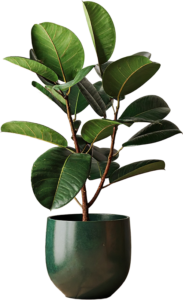 The Rubber Plant (Ficus elastica) is a bold, statement-making houseplant loved for its glossy, oversized leaves and ability to grow into a small indoor tree. Native to Southeast Asia, it adapts surprisingly well to indoor conditions, making it a favorite for plant enthusiasts who want a touch of drama without too much extra care.
Available in striking varieties like the dark “Burgundy” or the variegated “Tineke,” Rubber Plants offer both sophistication and versatility. They can grow compact in smaller pots or stretch tall when given room, making them a dynamic choice for living rooms, offices, or any bright corner that needs a touch of life.
Quick Facts
| Category | Details |
|---|---|
| Light | Bright, indirect light; tolerates some direct sun |
| Watering | Water when top 2–3″ soil is dry |
| Soil Type | Well-draining potting mix with perlite |
| Humidity | Prefers moderate humidity |
| Fertilizer | Monthly during spring and summer |
| Propagation | Stem cuttings or air layering |
Care Tips
Light
Rubber Plants thrive in bright, indirect light. They can handle some direct morning sun, but harsh afternoon rays may scorch their leaves. Lower light slows growth and can cause leaf drop.
Watering
Allow the top 2–3 inches of soil to dry between waterings. Overwatering is the most common mistake and leads to root rot. In winter, water less frequently as growth slows.
 Soil
Soil
Choose a rich, well-draining soil. A peat-based potting mix with perlite works well. Ensure your container has proper drainage.
Humidity
While they tolerate average indoor humidity, Rubber Plants look their best with slightly higher levels. Brown edges often indicate the air is too dry.
Fertilizer
Feed monthly during the active growing season with a balanced liquid fertilizer. Pause feeding in fall and winter.
Propagation
Rubber Plants can be propagated by stem cuttings or air layering. Cuttings root well in water or soil, though patience is required.
Troubleshooting
Dropping Leaves: Often from inconsistent watering or sudden light changes.
Yellow Leaves: Overwatering is the culprit.
Dusty Leaves: Wipe with a damp cloth to keep foliage glossy and healthy.
Styling Ideas
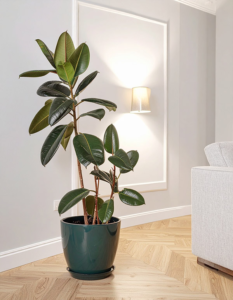
With their bold leaves, Rubber Plants command attention. Use them as a floor plant in minimalist rooms, or choose a variegated variety to add brightness and pattern. Pair them with woven baskets or ceramic planters for a stylish finish.
Related Resources:
6 Statement Plants That Will Steal the Show in Your Living Room
Top 10 Easy Houseplants for Beginners (Low-Maintenance Indoor Plants You’ll Love)
👉 Explore more guides in the Happy Houseplant Encyclopedia.