Calathea Care Guide
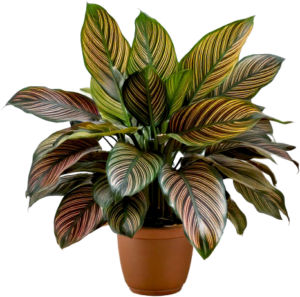 If you’re drawn to houseplants for their striking foliage, Calatheas (Calathea spp.) will stop you in your tracks. Known as “prayer plants” for their habit of folding leaves upward at night, these tropical beauties come in a variety of patterns and colors, from bold stripes to intricate mosaics. While they’re undeniably stunning, Calatheas are also a little fussy, making them better suited for plant parents who enjoy a bit of a challenge. With the right care, however, they’ll reward you with vibrant growth and show-stopping leaves.
Quick Facts
| Category | Details |
|---|---|
| Light | Bright, indirect light |
| Watering | Keep soil consistently moist but not soggy |
| Soil Type | Peat-based, well-draining potting mix |
| Humidity | High humidity (50–70%) |
| Fertilizer | Diluted balanced fertilizer every 4 weeks (spring–summer) |
| Propagation | Division during repotting |
Care Tips
Light
Calatheas need bright but indirect light to maintain their leaf patterns. Too little light fades their colors, while direct sunlight scorches their delicate leaves.
Watering
They thrive on consistently moist soil. Water when the top inch feels slightly dry, using filtered or distilled water if possible (they’re sensitive to tap water minerals).
Soil
A peat-based potting mix with added perlite or orchid bark provides the right balance of moisture and drainage.
Humidity
High humidity is key. Aim for 50–70%, achieved with a humidifier, pebble tray, or grouping plants together.
Fertilizer
Feed with a diluted, balanced liquid fertilizer every 4 weeks during spring and summer. Too much fertilizer can cause leaf burn.
Propagation
Divide the root ball when repotting in spring. Each division should have a few leaves and healthy roots.
Troubleshooting
Crispy leaf edges: A sign of low humidity or poor water quality.
Curling leaves: Could indicate underwatering or low humidity.
Leaf fading: Too much direct sunlight.
Styling Ideas
Calatheas shine as statement plants on shelves, side tables, or grouped with other tropicals. Their patterned leaves add a pop of artistry to any space.
Related Resources
to come
👉 Explore more guides in the Happy Houseplant Encyclopedia.
(All images by rawpixel.com)