
Peace Lily Care Guide
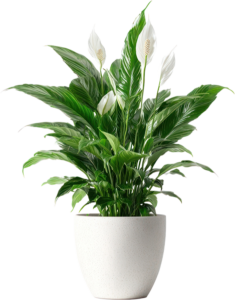 The Peace Lily (Spathiphyllum wallisii) is one of the most popular and forgiving houseplants, admired for its lush, dark green leaves and elegant white blooms that resemble calla lilies. Known as a symbol of peace, purity, and tranquility, this tropical beauty has a natural ability to improve indoor air quality, making it both a decorative and functional addition to your home. It thrives in low to medium light, requires only moderate care, and signals when it needs attention—making it one of the best plants for beginners.
Whether you live in a bright apartment or a shaded home office, the Peace Lily adapts gracefully to a range of indoor conditions. Its showy flowers, which can bloom several times a year, bring a touch of sophistication while requiring less fuss than many flowering plants. If you’re looking for a low-maintenance houseplant that combines elegance with practicality, the Peace Lily is a top choice.
Quick Facts
| Category | Details |
|---|---|
| Light | Low to medium, indirect light |
| Watering | When top 1–2″ of soil is dry; droops when thirsty |
| Soil Type | Well-draining, peat-based potting mix |
| Humidity | Prefers moderate to high humidity |
| Fertilizer | Balanced liquid feed every 6 weeks during growing season |
| Propagation | Division of root clumps |
Care Tips
Light
Peace Lilies tolerate low light better than many houseplants, making them ideal for bedrooms, offices, and hallways. However, for the healthiest growth and consistent blooming, place them in medium, indirect light near a north- or east-facing window. Avoid direct sun, which can scorch the leaves.
Watering
One of the Peace Lily’s most endearing qualities is its ability to “tell” you when it’s thirsty. Its leaves dramatically droop when the soil has dried out, and after a good drink, it perks back up within hours. As a general rule, water when the top inch of soil feels dry. Reduce watering frequency in the winter months when growth slows.
Soil
Choose a well-draining potting mix that retains some moisture but doesn’t stay soggy. A peat-based blend with added perlite or orchid bark works best. Ensure the pot has drainage holes to prevent root rot.
Humidity
Native to tropical forests, Peace Lilies prefer higher humidity. While they will tolerate average home conditions, they thrive with a bit of extra moisture in the air. Place the pot on a pebble tray filled with water or run a humidifier nearby to prevent brown leaf tips.
Fertilizer
Feed your Peace Lily every 6 weeks during spring and summer with a balanced, water-soluble fertilizer diluted to half strength. Over-fertilizing can cause brown leaf tips, so it’s better to underfeed than overdo it.
Propagation
The easiest way to propagate a Peace Lily is by division. When repotting, gently separate root clumps into smaller sections, ensuring each division has at least a few healthy leaves and roots. Replant into fresh soil and water well.
Troubleshooting
Yellow Leaves: Often caused by overwatering. Let the soil dry out slightly before watering again.
Brown Tips: Usually due to low humidity, tap water chemicals, or fertilizer buildup. Use filtered water and increase humidity levels.
No Flowers: Peace Lilies bloom best with bright, indirect light. If yours isn’t flowering, move it closer to a window and ensure it’s fed regularly.
Styling Ideas
Peace Lilies fit seamlessly into modern, minimalist, or traditional décor. Their sculptural white blooms add elegance to side tables, desks, or entryways. Pair them with darker ceramic or woven baskets to highlight their rich green foliage, or place them in groups with ferns and pothos for a lush, layered look.
Related Resources:
10 Best Indoor Plants for Low-Light Rooms
Top 10 Easy Houseplants for Beginners (Low-Maintenance Indoor Plants You’ll Love)
👉 Explore more guides in the Happy Houseplant Encyclopedia.