
Snake Plant Care Guide
 Snake Plant (Sansevieria trifasciata, also called Mother-in-Law’s Tongue) is a favorite for beginners and seasoned plant lovers alike. Known for its bold upright leaves with striking variegation, this plant is nearly indestructible and thrives on neglect. Snake Plants tolerate low light, infrequent watering, and a variety of home environments—making them a must-have for busy plant parents or anyone just starting their indoor jungle.
Quick Facts
| Category | Details |
|---|---|
| Light | Low to bright indirect light (tolerates some direct sun) |
| Watering | Every 2–4 weeks; let soil dry completely between waterings |
| Soil Type | Well-draining cactus or succulent mix |
| Humidity | Average home humidity (30–50%) |
| Fertilizer | Balanced houseplant feed every 6–8 weeks in spring/summer |
| Propagation | Leaf cuttings in soil or water; division of rhizomes |
Care Tips
Light
Snake Plants adapt to almost any light situation, from low-lit corners to sunny windowsills. While they will grow fastest in bright, indirect light, their tolerance for dim spaces makes them one of the best low-light plants available. Avoid prolonged harsh direct sunlight, which can scorch the leaves.
Watering
Overwatering is the number one way to kill a Snake Plant. Always allow the soil to dry completely before watering again—typically every 2–4 weeks, depending on your home environment. In winter, watering needs drop even more. Stick a finger 2–3 inches into the soil; if it feels dry, it’s safe to water.
Soil
Snake Plants thrive in fast-draining soil. Use a cactus or succulent mix, or amend standard potting soil with sand or perlite to prevent water from sitting around the roots. This helps avoid root rot, which Snake Plants are particularly prone to.
Humidity & Temperature
Average household humidity is perfect. These plants also tolerate a wide temperature range but prefer between 65–85°F (18–29°C). Keep them away from cold drafts and prolonged exposure to temperatures below 50°F (10°C).
Fertilizer
Snake Plants aren’t heavy feeders. A balanced, water-soluble fertilizer applied once every 6–8 weeks during the growing season (spring and summer) is plenty. Skip feeding in fall and winter when growth slows down.
Propagation
Propagating a Snake Plant is simple. You can divide mature plants by separating their rhizomes when repotting, or root leaf cuttings in either water or soil. Water propagation is fun because you can see roots develop, but soil propagation tends to establish new plants faster.
Troubleshooting
Yellow leaves: Usually a sign of overwatering. Let soil dry thoroughly and check drainage.
Wrinkled or curling leaves: Underwatering or extremely dry air. Adjust watering frequency.
Mushy leaves at the base: Root rot from standing water—remove damaged leaves and repot in dry, well-draining soil.
Leaves falling over: Can be from age, overwatering, or low light. Trim damaged leaves and provide more stable conditions.
Styling Ideas
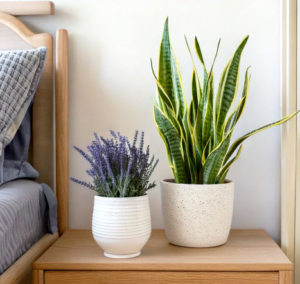
Snake Plants look striking in modern, minimalist décor thanks to their architectural form. Tall floor planters emphasize their height, while tabletop pots with white or neutral tones highlight their variegation. They also pair beautifully with trailing plants like pothos or ivy for a contrast in shape.
Related Resources
10 Best Indoor Plants for Low-Light Rooms
Top 10 Easy Houseplants for Beginners (Low-Maintenance Indoor Plants You’ll Love)
👉 Explore more guides in the Happy Houseplant Encyclopedia.
(Image of houseplants on end table in bedroom by rawpixel.com)